Recall the Naked Pair pattern: In a given row, column or box, two cells contained the same pair of possible values. It was evident that these two values were in these cells. Although we didn't know which value belonged to which cell, it was certain that they were definitely in one of them. Consequently, we could eliminate these values from the other cells of the row, column or box.
The Naked Triple pattern extends this method: In a given row, column or box, there are three cells that contain the same three values exclusively. This allows us to eliminate these values from the other cells.
While the concept remains the same, spotting the Naked Triple is much more challenging than the Naked Pair. In the Naked Pair, you had the same two values in both cells. However, in the Naked Triple, you might often encounter only a part of the triple in some of the cells.
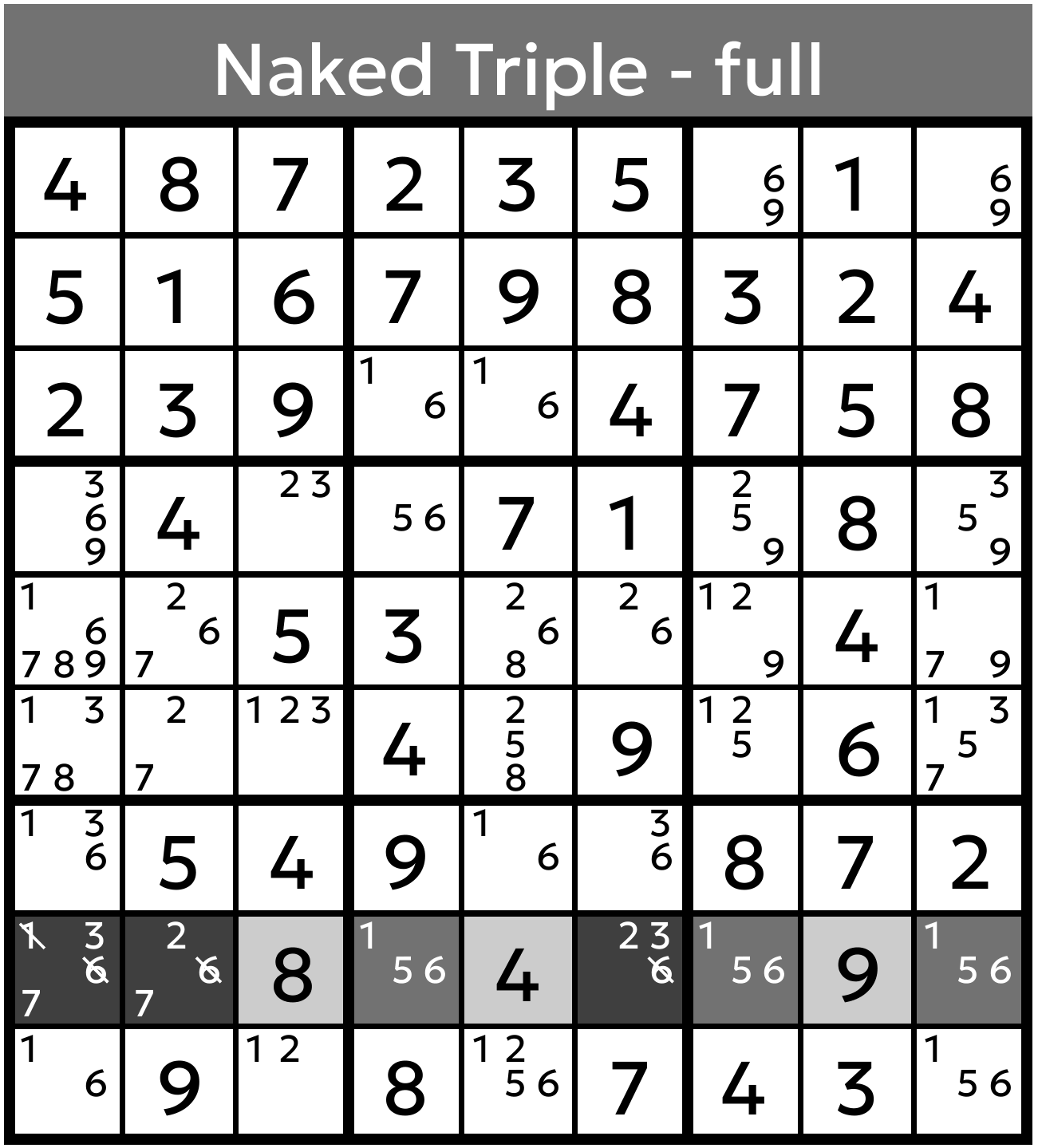
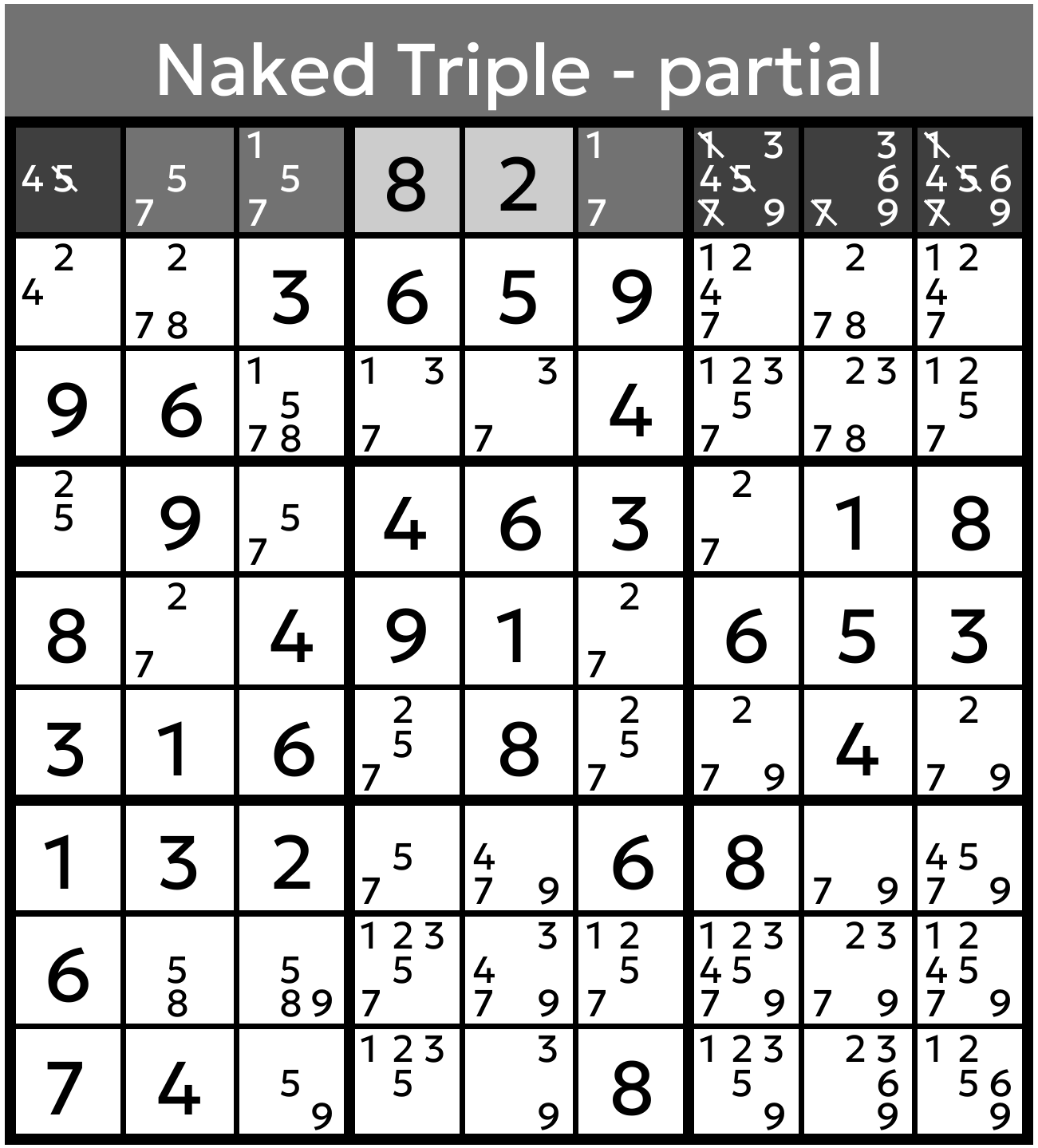
Take a look at the examples above! In the first instance, the triple is clear: within the three medium-gray highlighted cells, you encounter the same three numbers: 1, 5, and 6. Consequently, you can eliminate these numbers from the other, dark shaded cells.
In the second example, the triple isn't immediately obvious. Yet, within the medium-gray shaded three cells, you have exclusively three numbers: 1, 5, and 7. Recognizing this is not very straightforward: one of the cells contains only numbers 5 and 7, another one contains all three - 1, 5, and 7 - , and the third cell contains only 1 and 7. However, the three cells together exclusively contain three values: 1, 5, and 7, so we can eliminate these values from the other, dark-shaded cells in the row.
Hard #36 in the 1200 Sudoku Medium to Hard book, move 23. Open the app at this move and step through it.